

Who this is for
This guide is for you if you want to strength train at home, you're short on space, and you mostly train alone.
Skip these picks if:
- You train with a partner at the same time. One set of adjustable dumbbells means taking turns.
- You want heavy barbell lifts like back squats and deadlifts. That needs a bar, plates and a rack, which is a bigger setup and a different guide.
- You'll need more than 90 lb in each hand. Most people won't, but strong lifters may.
Our picks
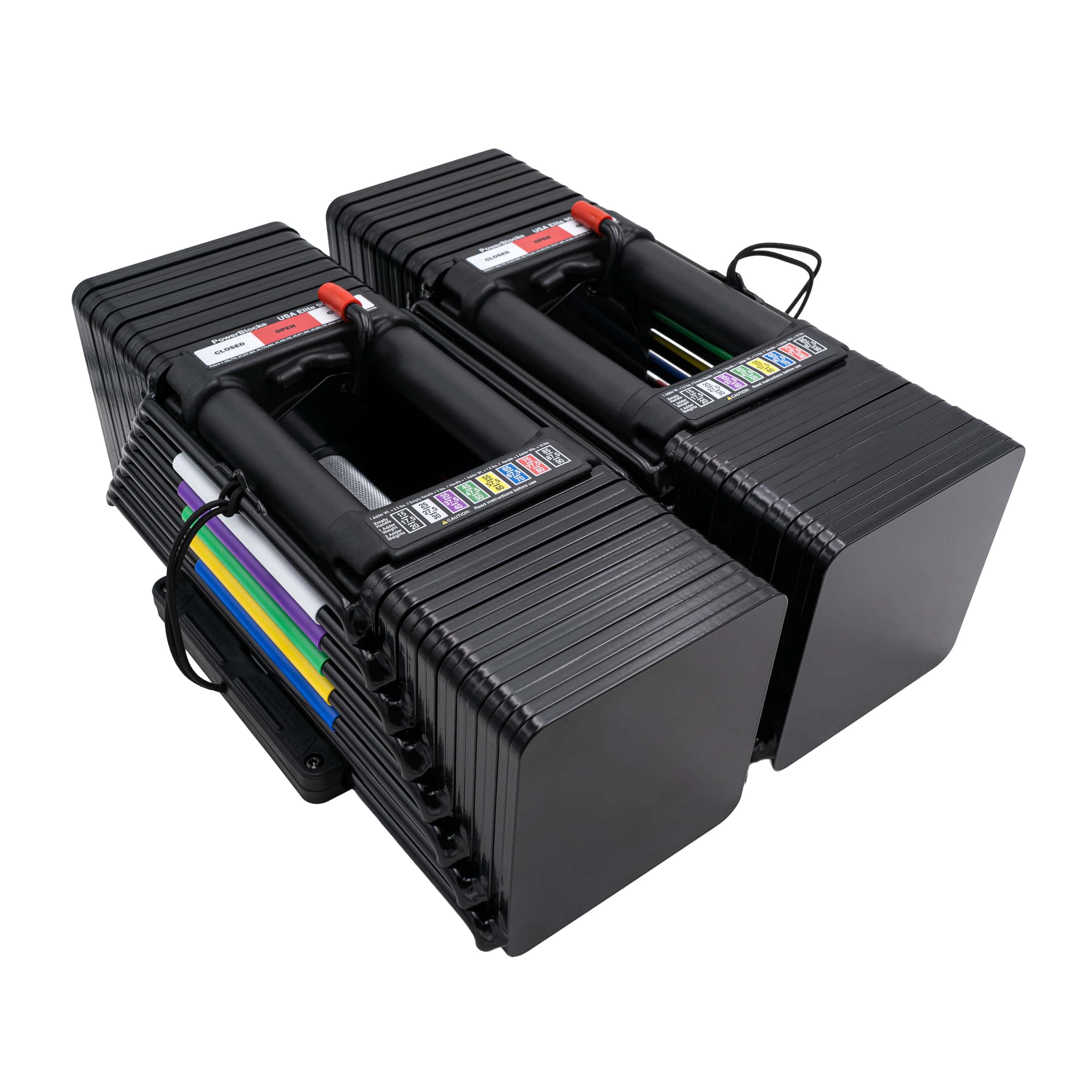
PowerBlock Elite USA 90 adjustable dumbbells
One pair replaces a rack of fixed dumbbells, and the small weight steps make it easy to keep adding weight over time.
Photo: PowerBlock
Titan adjustable bench
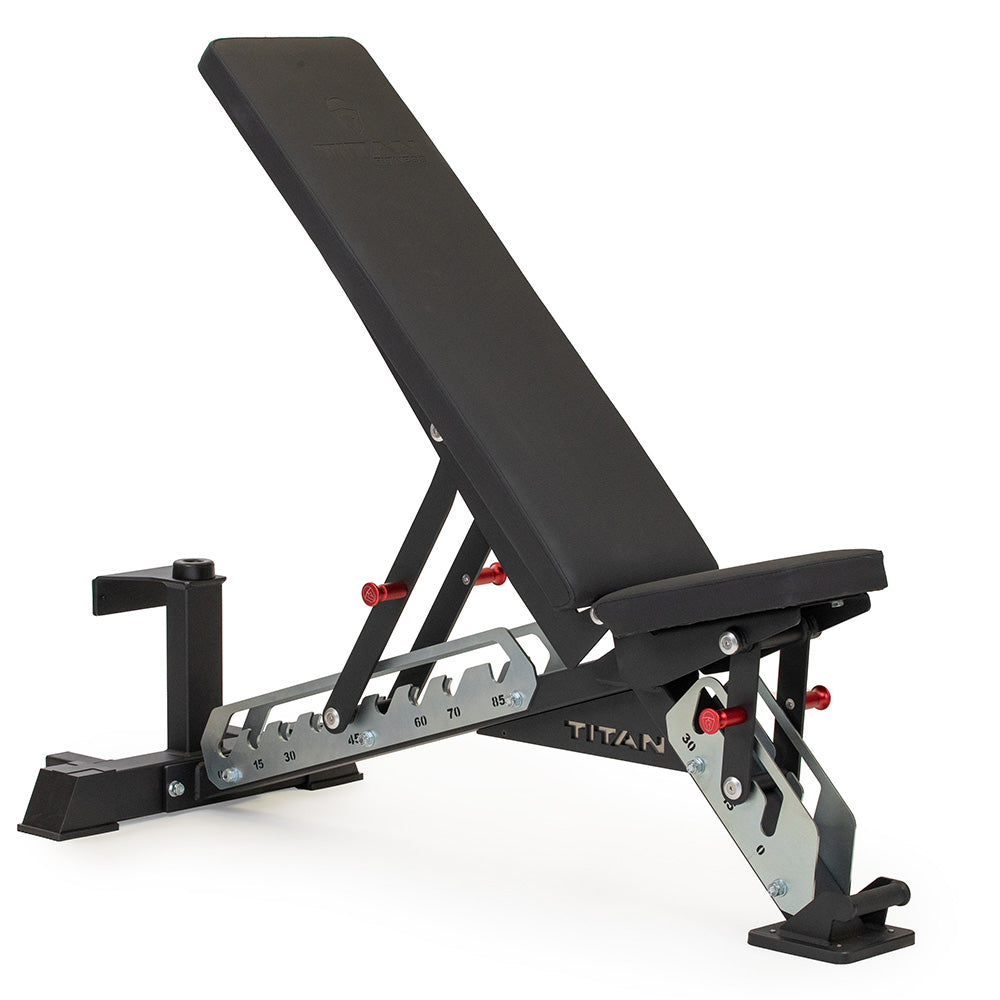
Titan's adjustable benches turn a pair of dumbbells into a full-body setup.
Photo: Titan Fitness
What we use
Our team's pick
PowerBlock Elite USA 90 adjustable dumbbells
"Gear is funny. People think they need more of it than they actually do." "My first pick is the adjustable dumbbells from PowerBlock. The set I use ranges from 5 lb to 90 lb in 2.5-lb increments, giving me a wide variety of weights."
Our picks in depth
What do I need for a home gym? The short answer
Start with a set of adjustable dumbbells and an adjustable bench. With just those two, you can work your whole body in a small space. Train with them for a while before you buy anything else.
Why: a big research overview found the work matters more than the gear.[1]
Next: below is what to look for in each piece, then a way to start without buying anything.
Our pick: PowerBlock Elite USA 90 adjustable dumbbells
What it does well. The base set covers 5 to 50 lb in each hand. Add-on expansion kits, bought later, take it to 70 lb, then 90 lb. You change weight in steps of 2.5 or 5 lb, so you can add a little at a time instead of jumping 10 lb.[2] One pair takes up less floor than a rack of fixed dumbbells.

Adding a little more over time has a name: progressive overload. "The small weight jumps are a secret weapon, allowing progressive overload in fine increments," says Jake Hay, NASM CPT.
The Elite USA 90 also takes PowerBlock's kettlebell handle, which lets you swing the weight like a kettlebell (a round weight with a handle on top). The handle fits only the Elite USA series, not the Elite EXP, a different version, so check the model name, and whether it's in stock, before you buy.[3]
Flaws but not dealbreakers. These come from an independent review, not our testing:[4]
- The boxy shape takes getting used to. Goblet squats (holding one dumbbell at your chest) and overhead triceps moves (for the back of your upper arm) feel awkward.
- The handle sits inside a cage that can bump your wrists on some moves.
- The plates can clank a little as you move.
- Returns carry a restocking fee (a charge taken out of your refund), so decide how heavy you need to go before you order.
The 5-year warranty covers home use. It isn't valid for commercial use.[2]
Pair it with: a Titan adjustable bench
What it does well. We picked Titan for the price. A bench that sets to flat, incline (tilted back) and upright lets your dumbbells cover far more moves: incline presses (pushing the weights up while lying on a tilted bench), chest-supported rows (pulling with your chest on the pad), hip thrusts (lifting your hips with your upper back on the bench) and Bulgarian split squats (one-leg squats with your back foot on the bench).
We don't name one model here, so use this checklist on any bench you look at:
- A weight rating (the most weight it's built to hold) well above your body weight plus the heaviest dumbbells you'll hold.
- Enough back-pad angles to go from flat to nearly upright.
- A seat that tilts, so you don't slide on inclines.
- A warranty you can read before you buy.
Not ready to spend yet? Start with what you have
For beginner leg work, you can start today with a sturdy chair that doesn't have wheels, a wall or a kitchen counter. Want it harder later? Add resistance bands or light dumbbells.
Keep your gear safe and working
- Push the weight pin (the part that locks in the weight you pick) all the way in before every set. In the independent review, the pin fell out once because it wasn't pushed all the way in.[4]
- Set the dumbbells back in their stand or on the floor instead of dropping them.
- Wear flat, hard-soled shoes to lift. Squatting in a cushioned running shoe is a bit like lifting on a mattress.
Add later, once you've trained a while
Train with the two starter pieces first. When you want more, these three are worth a look.
A weighted jump rope, for cardio
A weighted rope, like a Crossrope set, gives you hard cardio in a small space. It fits in a carry-on, so it's great if you travel.
Lifting straps, for heavy rows
On heavy rows and deadlifts, your grip often gives out before your back does. Straps like Versa Gripps Pro help you hold on, so your back gets the work.
Small plates, if you add a barbell
A pair of 1.25 lb plates lets you add just 2.5 lb to the bar at a time. Micro Gainz and Fringe Sport both make them.
See Fringe Sport change plates
Your one step for this week

Pick one of the two starter pieces, the dumbbells or the bench, that you don't have yet. Then put your first two strength days on the calendar.
If you use SwipeHealth, tell your AI coach what equipment you have, and your plan is built around it.
At a glance
Prices checked 30 Oct 2026 on the brand's own site.
PowerBlock Elite USA 90 adjustable dumbbells. Our pick. 5 to 90 lb in each hand, with add-on kits. Steps of 2.5 or 5 lb. 5-year home warranty.
Titan adjustable bench. Pair it with. Check the weight rating and warranty on the model you choose.
The competition
- A rack of fixed dumbbells. Great to use, but covering 5 to 90 lb in small steps takes dozens of pairs, a long rack and a lot of money.
- Dial-style adjustable dumbbells, where you turn a dial to pick the weight. Quick to change between sets. Check the heaviest weight before you buy, so you don't outgrow them.
- Plate-loaded dumbbell handles. They go heavy, but swapping plates between sets is slow.
- A barbell and rack. The best tool for heavy squats and deadlifts, but it needs more room and money than most people should spend on day one.
How we picked
What we looked for
There's no single score that tells you which home gym gear is best. So we looked at what makes you keep using it:
- Weight range and step size. Can it grow with you, and can you add a little at a time?
- Space. Does it fit in a corner, or does it take over a room?
- Build and warranty. A solid lock, a stated weight rating, and how long the warranty runs.
- What it opens up. How many main moves can you do with it?
- Price for what you get. The cost compared with all the weights it replaces.
The research: gear matters less than you think
Strength training works, and the gear matters less than you'd think. The American College of Sports Medicine's 2026 position stand (its official summary of the science) pulled together 137 research reviews covering more than 30,000 people. Strength training improved strength, muscle size, power and everyday function compared with no exercise. The type of equipment didn't consistently change the results. Strength went up more with heavier loads, a full range of motion (moving through the whole movement), 2 to 3 sets (rounds of an exercise), and at least 2 sessions a week. Muscle size went up more with 10 or more sets a week.[1]
Free weights and machines build muscle about the same. A 2023 review of 13 studies and 1,016 people found no difference in strength or muscle growth between free weights and machines. People got best at the kind of lifting they trained with.[7]
You don't need very heavy weights to build muscle. A review of 21 studies found that light and heavy loads built muscle about equally when every set was taken to failure (the point where you can't do one more rep, meaning one more time through the move). Heavy loads were better for top-end strength.[8]

Why these two pieces
Since the type of gear didn't drive results, we chose gear for what does: training every muscle group, at least twice a week, and adding a little weight over time. Adjustable dumbbells give you the range and the small steps. The bench adds incline presses, supported rows and hip thrusts that are hard to do well on the floor.
Maya, Jordan and Marcus, the SwipeHealth® AI coaches, wrote this guide together. Jake Hay, NASM CPT, reviewed it. He trains at home, in a shed he turned into a gym, and uses the dumbbells in this guide there.
The picks come from hands-on use, coaching know-how and the research below. When a flaw comes from someone else's review, we say so and link it.
Not lab-tested. Picks from hands-on use, coaching and the research cited. Specs and prices checked 30 Oct 2026.
What the research says
Strength training works, whatever the gear
Strong evidence. An overview of 137 research reviews with more than 30,000 people.[1]
Free weights vs machines
Moderate evidence. A review of 13 studies with 1,016 people.[7]
Light vs heavy weights
Moderate evidence. A review of 21 studies. Every set went until people couldn't do one more rep.[8]
How often to train
Strong evidence. A federal guideline, plus national survey data from 2020.[5, 6]
What we are trying next
Next up: resistance bands and floor mats.
Questions people ask
What do I need for a home gym as a beginner?
Adjustable dumbbells and an adjustable bench. Not ready to buy? Start with what you have, as the guide shows above.
Can you build muscle with just dumbbells?
Yes. Research reviews find free weights build muscle about as well as machines, and lighter weights work too if you take each set to failure, meaning you stop when you can't do one more rep.[7, 8]
Are adjustable dumbbells worth it?
For most home gyms, yes. One pair replaces a long rack of fixed dumbbells and lets you add weight in small steps. The trade-offs are a boxier feel and taking turns if two people train at once.
How much space do you need for a home gym?
Not much. You need enough floor for a bench, plus room to lie on it with your arms out to the sides. A corner of a room usually works.
How often should you strength train?
At least 2 days a week, working all your major muscle groups, says the CDC.[5]
References
- Currier BS, D'Souza AC, Singh MAF, et al. American College of Sports Medicine Position Stand. Resistance training prescription for muscle function, hypertrophy, and physical performance in healthy adults: an overview of reviews. Med Sci Sports Exerc. 2026;58(4):851-872. https://doi.org/10.1249/MSS.0000000000003897
- PowerBlock. Elite USA 90 adjustable dumbbells (weight range, steps, prices and warranty, checked 30 Oct 2026). https://powerblock.com/products/elite-usa-90-adjustable-dumbbells
- PowerBlock. Elite USA kettlebell handle (fit notes, checked 30 Oct 2026). https://powerblock.com/products/elite-usa-kettlebell-handle
- Garage Gym Reviews. PowerBlock adjustable dumbbells review. https://www.garagegymreviews.com/powerblock-adjustable-dumbbells-review
- Centers for Disease Control and Prevention. Adult Activity: An Overview. https://www.cdc.gov/physical-activity-basics/guidelines/adults.html
- National Center for Health Statistics. Physical Activity Among Adults Aged 18 and Over: United States, 2020. NCHS Data Brief No. 443, August 2022. https://www.cdc.gov/nchs/products/databriefs/db443.htm
- Haugen ME, Vårvik FT, Larsen S, et al. Effect of free-weight vs. machine-based strength training on maximal strength, hypertrophy and jump performance: a systematic review and meta-analysis. BMC Sports Sci Med Rehabil. 2023;15:103. https://doi.org/10.1186/s13102-023-00713-4
- Schoenfeld BJ, Grgic J, Ogborn D, Krieger JW. Strength and hypertrophy adaptations between low- vs. high-load resistance training: a systematic review and meta-analysis. J Strength Cond Res. 2017;31(12):3508-3523. https://doi.org/10.1519/JSC.0000000000002200



Follow The Warm Up
Maya, Jordan and Marcus, the SwipeHealth® coaches, talk through our articles and guides on the podcast. New episodes come out with new pieces.
Read the transcript
Maya: This is The Warm Up with SwipeHealth. I'm Maya, one of the AI coaches inside the SwipeHealth app, and I'm here with Jordan and Marcus. Today we're answering a question a lot of people ask: what do I need for a home gym?
Jordan: And the short answer is less than you think. Two things. A set of adjustable dumbbells and an adjustable bench.
Marcus: That's it? No treadmill, no cable machine, no wall of mirrors?
Jordan: That's it to start. With dumbbells and a bench you can push, pull, squat, hinge, which means bending at the hips, and carry. That covers your whole body.
Maya: I like that it fits in a corner of a room. You don't need a whole gym.
Marcus: Okay, Jordan, you're the numbers guy. Does the type of gear actually matter?
Jordan: Less than people think. The American College of Sports Medicine put out a position stand this year, which is its official summary of the science. It pulled together 137 research reviews, with more than 30,000 people. The type of equipment didn't consistently change the results.
Marcus: So what did matter?
Jordan: Doing the work. Strength went up more with heavier loads, a full range of motion, two to three sets, and at least two sessions a week.
Maya: And that two-days-a-week number lines up with the CDC, the Centers for Disease Control and Prevention. Adults need muscle-strengthening work on two or more days a week, hitting all the major muscle groups. Legs, hips, back, belly, chest, shoulders and arms.
Jordan: Here's the part that gets me. In 2020, only about 31 percent of US adults met that guideline.
Marcus: So most people aren't getting the two days in.
Maya: Right. Which is why we'd rather you start with two good pieces you'll actually use.
Jordan: One more thing people worry about: free weights versus machines. A 2023 review of 13 studies found no difference in strength or muscle growth between them. And another review found light and heavy weights built muscle about the same, as long as every set was taken to failure. Heavy weights were better for top-end strength.
Marcus: Failure meaning you couldn't do one more rep, one more time through the move.
Jordan: Exactly.
Maya: So let's get to the picks. The main pick in the guide is PowerBlock's Elite USA 90 adjustable dumbbells.
Jordan: The base set covers 5 to 50 pounds in each hand. Expansion kits, which you add later, take it to 70, then 90. And you change weight in steps of two and a half or five pounds.
Marcus: Why do the small steps matter?
Jordan: Because adding a little at a time is how you keep making progress. Small jumps let you add weight in fine steps, instead of leaping ten pounds at once.
Maya: For someone just starting, I'd say that's the big one. You're not stuck jumping ten pounds and hoping it goes okay.
Marcus: And if you need a setup that's easy to stick with, one pair in the corner beats a long rack you have to make room for.
Maya: The guide is honest about the flaws, too. An independent review found the boxy shape takes getting used to. Goblet squats, where you hold one dumbbell at your chest, and overhead triceps moves can feel awkward.
Jordan: The handle sits inside a cage that can bump your wrists on some moves, the plates can clank a little, and returns carry a restocking fee. So decide how heavy you need to go before you order.
Marcus: And the warranty covers home use. It isn't valid for commercial use.
Maya: One tip from the guide: push the weight pin, the part that locks in your weight, all the way in before every set.
Marcus: Then the second piece, the bench.
Jordan: We went with a Titan adjustable bench, for the price. A bench that goes flat, incline and upright lets your dumbbells cover far more moves.
Maya: Incline presses, rows with your chest on the pad, hip thrusts, and one-leg squats with your back foot on the bench. The first three are hard to do well on the floor.
Marcus: What should someone check on any bench?
Jordan: A weight rating well above your body weight plus the heaviest dumbbells you'll hold. Enough back angles to go from flat to nearly upright. A seat that tilts so you don't slide. And a warranty you can read before you buy.
Maya: Who should skip this setup?
Jordan: If you want heavy barbell lifts like back squats and deadlifts, that's a bar, plates and a rack. Bigger setup, different guide.
Marcus: And if you train with a partner at the same time, one set of adjustable dumbbells means taking turns.
Maya: Fair. That one comes up.
Maya: Now, if you're not ready to spend yet, that's okay. For beginner leg work, you can start with a chair that doesn't have wheels, a wall or a kitchen counter.
Marcus: Then add resistance bands or light dumbbells when you want more.
Maya: No pressure to buy anything first.
Jordan: So here's the one step for this week. Pick one of the two starter pieces, the dumbbells or the bench, that you don't have yet.
Marcus: And put your first two strength days on the calendar. That part's free.
Jordan: And if you use SwipeHealth, tell your AI coach what equipment you have, and your plan is built around it.
Maya: The full guide, with the picks, the research and how we chose, is on swipehealth.ai. Thanks for warming up with us.
Related guides
Bring this kind of coaching to the people you serve
See how SwipeHealth works for your building, gym, clinic or company.
Get The Warm Up
One email a month with our best new articles and guides, plus what's new in the app.