
For menopause and midlife women's health clinics
Strength training is in the care plan. It's rarely in the week.
SwipeHealth gives every patient a guided strength program that adapts to how she feels, and gives you a view of it between visits.



Patients pick Maya, Jordan or Marcus as their AI coach
Guided, not self-directed.
Why guidance matters
1.3 million
U.S. women reach menopause every year.
Yale School of Medicine
1 in 2
women over 50 will break a bone because of osteoporosis.
Bone Health & Osteoporosis Foundation
62%
fewer major osteoporotic fractures with supervised exercise programs. Unsupervised programs showed no significant effect.
Hoffmann et al., Journal of Bone and Mineral Research, 2022
Guidance is what makes it work, and it's the part that disappears between visits.
The first years matter most.
Women can lose up to 20% of their bone density in the five to seven years after menopause (Bone Health & Osteoporosis Foundation).
Self-directed doesn't hold.
Patients are told to lift. Without guidance, most don't, or they stop.
Symptoms get in the way.
Bad sleep, low energy and joint aches derail a fixed plan fast.
What your patients and clinicians get
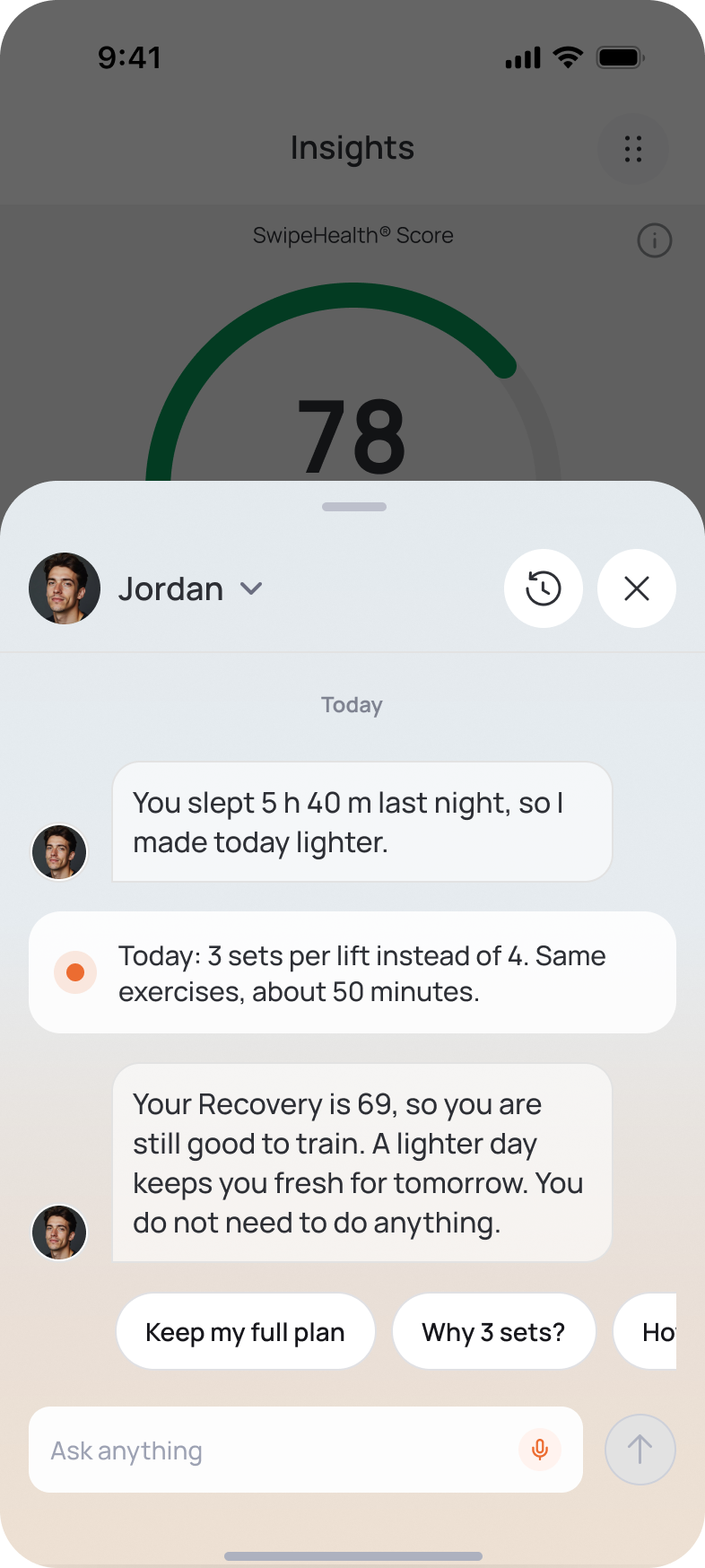
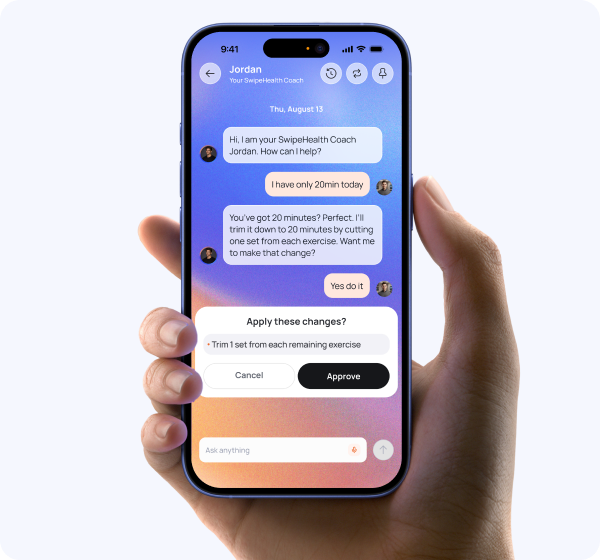
A SwipeHealth® coach that adapts to how she feels.
Every patient gets her own coach and a strength program built around what she has, at home or at a gym. On a bad-sleep or low-energy day, she says so, and the program adjusts instead of breaking. It starts where she is, even if she's never lifted. The programming is built by doctors of health science and certified personal trainers.
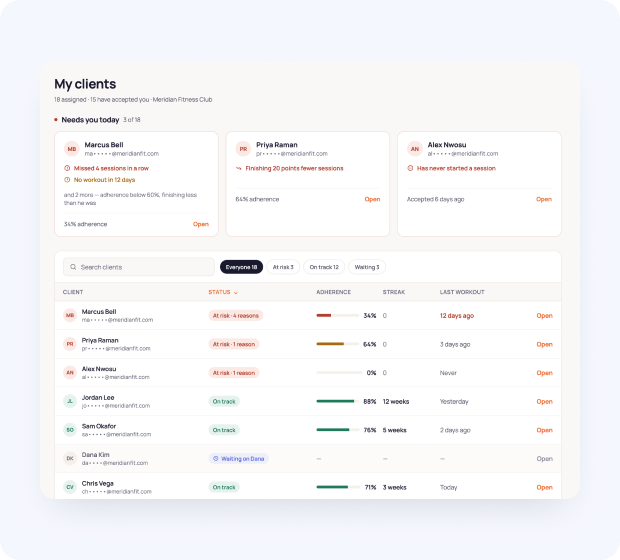
See every patient between visits.
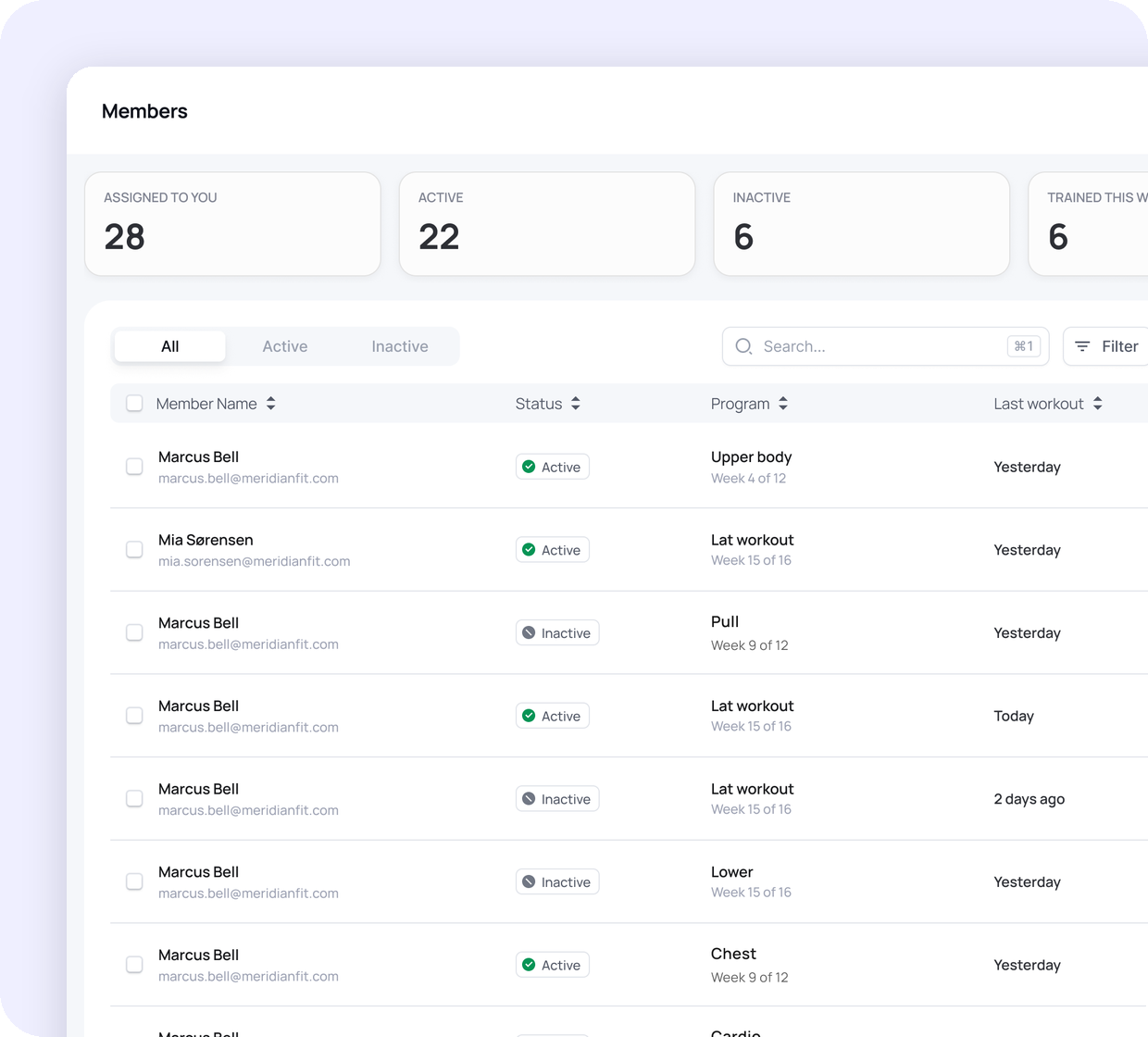
Your clinicians see each patient's adherence, progression and past sessions, flag who's slipping and add notes before the next appointment.
How it works
Few midlife clinics offer structured training at all.
01
Invite from your clinic
Each patient gets an invite and activates the app.
02
She starts where she is
A strength program built around what she has, even if she's never lifted.
03
It adapts to how she feels
Bad sleep or low energy? She says so and the day adjusts.
04
Your clinicians see adherence
Progress and who's slipping, before the next appointment.
Why not just…
Not a handout. Not a video series. Not a one size plan. Guided strength training that fits her week.
Book a call.
Thirty minutes, and we'll show you what your patients would get. Worth more to your patients: add it to a membership tier or make it part of standard care.
Calendar not loading? Open it in a new tabFrequently asked questions
Most of my patients have never lifted.
It starts at her level and builds from there. Every movement comes with video instruction.
Will they stick with it?
It adapts on hard days instead of breaking, and you'll see who's slipping before the next visit.
What about bad sleep, low energy or hot flash days?
She tells her coach, and it adjusts the day's plan.
What if she has joint aches?
She tells it what's bothering her and it works around it.
Does she need a gym?
No. It builds around what she has at home or at a gym.
Does this replace a trainer or physical therapist?
No. It carries the plan between sessions and gives everyone the same view.
What can our clinicians see?
Each patient's adherence, progression and past sessions, plus who's slipping. They can add notes before the next appointment.
How do patients get started?
They get an invite from your clinic and activate the app.
How can we offer it?
Add it to a membership tier or make it part of standard care.
How is it priced?
By the number of patients using it. We'll walk through it on a call.
Can we see it before we sign?
Take a meeting and you get one year of the consumer app free, so you can use it the way a patient would.